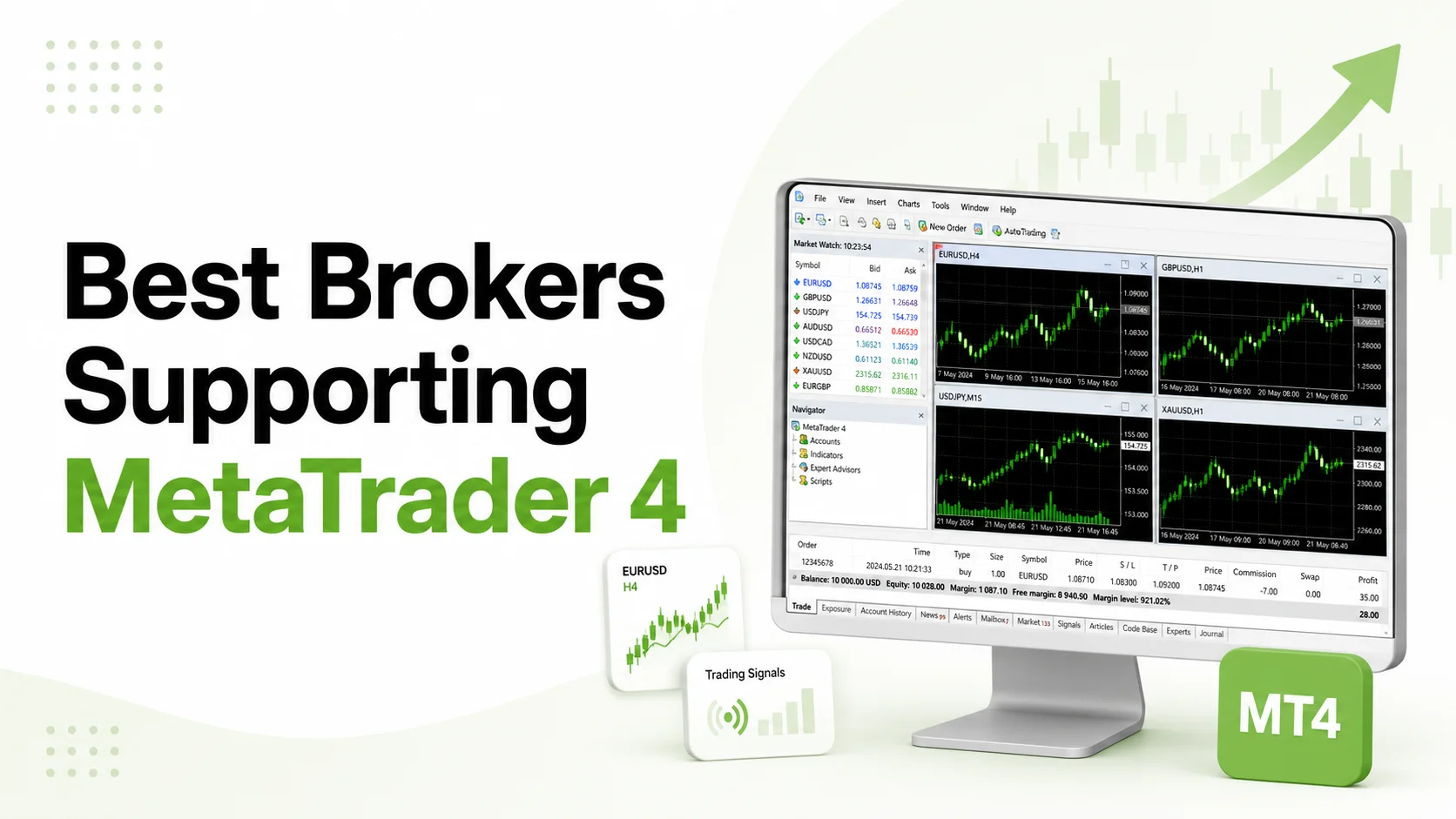































Not every broker that accepts U.K. residents provides the same regulatory safeguards. Pepperstone, OANDA, Tickmill, ThinkMarkets, and Swissquote place eligible U.K. accounts with FCA authorised companies. IC Markets Global, Capitalcore, and UnitedPips use account entities outside the FCA framework. Pepperstone remains the strongest all-round choice, combining competitive pricing with the broadest practical platform range in this group. This comparison is aimed at beginners, active forex traders, scalpers, TradingView users, and readers weighing local protection against wider platform and leverage choices.
Best Forex Brokers in the U.K.: Top Picks
- Best overall: Pepperstone, OANDA
- Best for low trading costs: Tickmill, IC Markets Global
- Best for platform choice: ThinkMarkets, Swissquote, IC Markets Global
Best for higher leverage where available: IC Markets Global, Capitalcore, UnitedPips
Compare the Best Forex Brokers in the U.K.
What U.K. Traders Need to Know
Are These Brokers Legal and Available?
The company named in the client agreement matters more than the brand on the website. Five brokers in this guide place eligible U.K. retail clients inside the FCA framework. IC Markets Global, Capitalcore, and UnitedPips use different account entities. Eligible U.K. residents can apply to IC Markets Global through Raw Trading Ltd, which is regulated in Seychelles. The United Kingdom is not listed among its restricted countries, although every application remains subject to identity checks, account approval, and local law.
U.K. retail clients cannot trade cryptocurrency derivatives through an FCA authorised broker. That rule covers products such as crypto CFDs, options, and futures. Buying spot cryptocurrency through a separate service is a different activity.
Local Trading Rules and Limits
FCA rules limit retail leverage to 1:30 on major currency pairs and 1:20 on non-major pairs and gold, with lower caps on riskier markets. They also require a 50% margin closeout, negative-balance protection, and no cash bonuses designed to encourage CFD trading.
Accounts provided outside the FCA framework can carry much higher leverage, but those figures are not U.K. retail or elective professional limits. IC Markets Global uses a dynamic model that can reach 1:5000 on smaller forex positions and then falls as trade size increases or higher margin rules apply. Professional status at an FCA authorised broker can also raise leverage, but some retail safeguards normally fall away.
What Protections Apply?
An FCA authorised broker must keep client money separate from its own operating funds. If the firm fails, an eligible claimant may receive up to £85,000 per person, per firm through the Financial Services Compensation Scheme. The Financial Ombudsman Service may review qualifying unresolved complaints. These protections deal with firm failure and misconduct, not a trade that simply loses money.
A company registration or overseas licence is not a substitute for FCA authorisation. IC Markets Global, Capitalcore, and UnitedPips do not provide an identified FCA account entity in this comparison, so FSCS cover and Financial Ombudsman review should not be assumed. IC Markets Global, Capitalcore and UnitedPips state that client money is held in segregated accounts and that Raw Trading Ltd clients receive insolvency insurance. Those arrangements remain separate from protections imposed and supervised by the FCA.
Detailed Broker Reviews
Pepperstone: Best Overall
Verdict
The Standard account keeps costs simple, while Razor pricing makes more sense for scalpers, algorithmic traders, and anyone who prefers to separate spread from commission.
Key facts
- Entity serving the U.K.: Pepperstone Limited.
- Licence and regulator: FCA reference 684312.
- Typical costs: Standard EUR/USD spreads from 1.0 pip. Razor spreads from 0.0 pips plus £2.25 per standard lot per side.
- Minimum deposit: £10 for cards and supported electronic wallets. No stated bank transfer minimum.
- Platforms: Pepperstone web and mobile, MT4, MT5, cTrader, and TradingView.
- Main account types: Standard, Razor, and spread betting.
Why it suits U.K. traders
The platform choice is useful. A trader can analyse in TradingView, automate through MetaTrader, or use cTrader for more detailed order control without moving the account elsewhere. The low funding threshold also leaves room for a sensible first test of execution and withdrawals.
Pros
- One of the most complete platform selections in the group.
- Razor pricing works well for frequent trading.
- A small initial card deposit is enough to test the account.
Cons
- Razor costs need to be calculated as spread plus commission.
- Overnight and instrument-specific charges still need checking.
Best for: Traders who want flexible platforms and low-cost execution.
Avoid if: The strategy requires leverage above U.K. retail limits.
OANDA: Best for Beginners
Verdict
The platform is clear, pricing is spread-based, and there is no minimum deposit, so the move from demo to a small real-money balance can be gradual.
Key facts
- Entity serving the U.K.: OANDA Europe Limited.
- Licence and regulator: FCA reference 542574.
- Typical costs: EUR/USD spreads from 0.6 pips.
- Minimum deposit: None.
- Platforms: OANDA web and mobile, MT4, MT5, and TradingView.
- Main account types: Personal, professional, joint, and corporate, with v20 and OANDA One subaccounts.
Why it suits U.K. traders
The proprietary workspace keeps charts, watchlists, orders, and margin information in view without feeling crowded. As a strategy becomes more technical, MetaTrader, TradingView, and API access provide room to grow, although the available route depends on the chosen subaccount.
Pros
- No deposit barrier for a small first account.
- The in-house platform is easy to learn.
- More advanced tools are there when they become necessary.
Cons
- Products and platforms differ between subaccounts.
- Overnight financing can materially affect longer trades.
Best for: Beginners and traders starting with a small balance.
Avoid if: Every platform and product must sit inside one account.
Tickmill: Best for Low Trading Costs
Verdict
On the Raw account, spreads start at 0.0 pips and commission is $3 per standard lot per side. That makes the full round-turn cost easier to estimate before a strategy goes live.
Key facts
- Entity serving the U.K.: Tickmill UK Ltd.
- Licence and regulator: FCA reference 717270.
- Typical costs: Raw spreads from 0.0 pips plus $3 per lot per side. Classic spreads from 1.6 pips without commission.
- Minimum deposit: $100 or equivalent.
- Platforms: MT4, MT5, MetaTrader WebTrader, and Tickmill mobile.
- Main account types: Raw, Classic, and professional.
Why it suits U.K. traders
For scalpers and expert adviser users, the minimum lot size of 0.01 and clear commission structure make position sizing and cost modelling straightforward.
Pros
- The Raw account commission is easy to understand.
- MT4 and MT5 support.
- The 0.01 minimum lot suits careful position sizing.
Cons
- No cTrader or TradingView in the listed U.K. platform set.
Best for: Active MetaTrader users focused on transaction cost.
Avoid if: TradingView or cTrader is essential.
IC Markets Global: Best for Scalpers and Platform Choice
Verdict
IC Markets Global is a strong non-FCA alternative in this group for traders who place execution, raw pricing, and platform choice ahead of local compensation arrangements. MT4, MT5, cTrader, and TradingView cover nearly every mainstream workflow, while the dynamic leverage schedule can rise well beyond FCA retail limits. The account sits with Raw Trading Ltd in Seychelles rather than an FCA-authorised U.K. company.
Key facts
- Entity serving the U.K.: Raw Trading Ltd, registration number 8419879-1.
- Licence and regulator: Seychelles Financial Services Authority securities dealer licence SD018. No FCA authorisation applies to this account entity.
- Typical costs: Raw Spread pricing starts from 0.0 pips. A GBP MetaTrader Raw Spread account charges £5.50 per standard lot round turn. The Standard account is commission-free and adds a 0.08-pip mark-up above raw pricing.
- Minimum deposit: $200 or equivalent is required as a starting amount. GBP is available as a base currency.
- Platforms: MT4, MT5, cTrader, and TradingView.
- Main account types: Standard, MetaTrader Raw Spread, cTrader Raw Spread, and swap-free options.
Why it suits U.K. traders
Using GBP as the account currency makes deposits, balances, and Raw Spread commissions easier to read without an automatic conversion into dollars. The platform range is equally practical: MetaTrader suits expert advisers, cTrader gives more detailed order control, and TradingView works for chart-led trading. Scalping, hedging, and small 0.01-lot positions are permitted, but the higher leverage schedule demands tighter risk limits than an FCA retail account.
Pros
- MT4, MT5, cTrader, and TradingView in one account group.
- The GBP Raw Spread commission is £5.50 per standard lot per round turn.
- Dynamic forex leverage can reach 1:5000 on smaller qualifying positions.
Cons
- The Raw Trading Ltd account is not FCA authorised.
- FSCS and Financial Ombudsman protections do not apply to this entity.
- Dynamic leverage and higher-margin periods can change margin requirements quickly.
Best for: Active forex traders, scalpers, expert adviser users, and TradingView or cTrader users.
Avoid if: FCA oversight, FSCS protection, or a fixed leverage schedule is essential.
ThinkMarkets: Best for ThinkTrader and Market Range
Verdict
ThinkMarkets is at its best through ThinkTrader. The platform feels designed for traders who want a modern multi-asset terminal without being pushed into a MetaTrader-only routine.
Key facts
- Entity serving the U.K.: TF Global Markets (UK) Limited.
- Licence and regulator: FCA reference 629628.
- Typical costs: Standard and ThinkTrader spreads from 0.4 pips. ThinkZero spreads from 0.0 pips plus commission.
- Minimum deposit: £10 for ThinkTrader, £50 for Standard, and £100 for ThinkZero.
- Platforms: ThinkTrader, TradingView, MT4, and MT5.
- Main account types: ThinkTrader, Standard, ThinkZero, and professional.
Why it suits U.K. traders
ThinkTrader works well for a broad watchlist, while TradingView and MetaTrader remain available for specialist charting and automation. The advertised 4,000 instruments matter most to traders who regularly move between forex, indices, commodities, and shares.
Pros
- ThinkTrader is a genuine reason to choose the broker.
- Both the platform menu and market range are broad.
- Spread betting for eligible U.K. residents.
Cons
- Commission needs checking for the exact account currency.
Best for: Multi-asset traders who prefer a modern proprietary platform.
Avoid if: All costs must be visible and transparent before registration.
Capitalcore: Best for Fixed Spreads Outside FCA Protection
Verdict
Capitalcore catches attention with a $10 Classic account, fixed spreads from 0.3 pips, and leverage as high as 1:2000.
Key facts
- Entity serving the U.K.: Capitalcore LLC, operating under an arrangement in Saint Vincent and the Grenadines.
- Licence and regulator: Registered with the IFSA under registration number BR-80164150-YZZ.
- Minimum deposit: $10
- Platforms: MegaTrader, Classic, Pro, web, and mobile.
- Main account types: Classic, Silver, Gold, and VIP.
Why it suits U.K. traders
Fixed spreads make the entry cost more predictable, and a $10 deposit keeps an initial funding test small. Losses cannot exceed the deposit, and the bonus and leverage conditions sit well outside the FCA retail framework.
Pros
- The Classic account can be opened with $10.
- Fixed spreads make entry costs easier to anticipate.
- Very high leverage is available under non-FCA terms.
Cons
- No equivalent local FCA protection was identified.
Best for: Experienced traders seeking high leverage, flexible account options, and access to a broad range of markets.
Avoid if: Local regulatory protection is essential.
Swissquote: Best for Larger Balances
Verdict
Swissquote is not trying to be the cheapest way to open a first forex account. It is aimed at traders with more capital who can make use of the Premium, Prime, and Elite tiers. The £1,000 starting point will be too high for many traders with smaller accounts.
Key facts
- Entity serving the U.K.: Swissquote Ltd.
- Licence and regulator: FCA reference 562170.
- Typical costs: Premium spreads from 1.3 pips, Prime from 0.6 pips, and Elite from 0.0 pips plus €2.50 per lot per side.
- Minimum deposit: £1,000 for Premium, £5,000 for Prime, and £10,000 for Elite for GBP-denominated accounts.
- Platforms: CFXD, TradingView, MT4, and MT5.
- Main account types: Premium, Prime, and Elite.
Why it suits U.K. traders
The account ladder is easy to understand: larger qualifying balances bring tighter headline spreads without changing the platform menu. That can suit an established trader, but adding capital only to reach a cheaper tier is rarely a sound risk decision.
Pros
- Platform choice remains strong across the account tiers.
- The step from Premium to Prime and Elite is easy to follow.
Cons
- The opening balance is high compared with the rest of the group.
- Monthly inactivity fee after six inactive months.
Best for: Experienced traders with larger balances.
Avoid if: The account is small or used infrequently.
UnitedPips: Best for a Low Entry Account Outside FCA Rules
Verdict
UnitedPips leads with a $10 card deposit, fixed spreads from 0.7 pips, and leverage up to 1:1000.
Key facts
- Entity serving the U.K.: The operation is based outside the U.K. and uses a Saint Lucia address.
- Licence and regulator: IFSA licence number BR-21718994-JNT.
- Minimum deposit: $10 by card, $25 by cryptocurrency.
- Platforms: Classic Trader, Pro Trader, and mobile.
- Main account types: Standard, Premium, and VIP.
Why it suits U.K. traders
The small opening amount and swap-free Standard terms may appeal to cost-conscious traders using non-FCA entities.
Pros
- A card deposit can start at $10.
- Fixed spreads start at 0.7 pips.
- The Standard account uses swap-free terms.
Cons
- No equivalent local FCA protection was identified.
Best for: Experienced traders seeking high leverage and a proprietary trading platform.
Avoid if: A wider range of tradable instruments is preferred.
How to Choose a Broker in the U.K.
Confirm the Legal Entity
Start by checking the legal company named in the account agreement, rather than relying only on the broker’s group brand. Its reference number, registered address, website, and authorised activities should match the details shown in the FCA register. An FCA licence held by another company within the same corporate group does not apply to an account opened with a separate legal entity.
Compare Total Trading Costs
Cost comparisons only work when the pair, trade size, and trading session are the same. The average spread matters, but so do commissions, overnight financing, currency conversion, withdrawals, and inactivity charges. A 0.0-pip headline can still be expensive once the commission is added.
Check Products and Platform Support
The right platform depends on how the trader actually works. MT4 and MT5 remain practical for expert advisers and custom indicators. cTrader gives more detail around order handling. TradingView suits chart-led workflows, while a good proprietary terminal can be easier to learn. The U.K. entity should also provide access to every market the strategy needs.
Review Deposit and Withdrawal Conditions
Deposits are usually easy. Withdrawals reveal more about how an account works. Check the limits, processing times, conversion charges, and whether funds must be returned through the original payment method. A small withdrawal test is sensible before the balance grows.
Final Verdict
Pepperstone is the best overall choice because it gets the balance right: pricing is competitive, platform choice is excellent, and the account can suit both manual and automated trading. OANDA is the better starting point for a beginner, particularly when a minimum deposit would otherwise encourage overfunding. Tickmill is the more focused raw-pricing option for MetaTrader, ThinkMarkets has the strongest proprietary-platform case, and Swissquote makes more sense as account size rises. Capitalcore, IC Markets Global, and UnitedPips offer high leverage and low entry points.
How We Reviewed These Brokers
Each broker was assessed according to the legal entity that would hold a U.K. client’s account. The review covered FCA authorisation, leverage limits, trading costs, minimum deposits, platforms, account types, payment conditions, client-money protections, negative-balance policies, and compensation arrangements.
When a broker operated through several companies, the assessment focused on the entity relevant to U.K. clients rather than relying on a licence held by another company within the same corporate group. Quoted spreads represent advertised starting levels and may widen during periods of low liquidity or sharp market movement.
More information about the assessment process is available on the broker review methodology page.
FAQ
What is the maximum leverage for a U.K. retail forex trader?
The limit is 1:30 on major currency pairs, with lower limits for other products.
Can U.K. retail traders use cryptocurrency CFDs?
No. FCA authorised firms cannot offer cryptocurrency derivatives to U.K. retail clients.
Which brokers offer cryptocurrency trading to U.K. clients?
OANDA is the clearest option in this comparison for U.K. retail clients who want to buy, sell, and hold cryptocurrencies. Its separate OANDA Crypto service provides spot trading in assets such as Bitcoin, Ethereum, Litecoin, XRP, and Chainlink. Capitalcore and UnitedPips allow clients to trade cryptocurrencies without any restrictions. Tickmill provides cryptocurrency CFDs only to eligible professional clients.
Does FSCS protection cover trading losses?
No. It can cover eligible claims against a failed authorised firm, not ordinary market losses.

Written by:
Daniel Harris
At TopFxBrokers, Daniel focuses on broker reviews, platform comparisons, educational guides, and market analysis. His writing emphasizes transparency, accuracy, and balanced evaluations, enabling readers to make informed trading decisions. He regularly follows central bank policies, economic data releases, and industry developments to keep his research current and relevant.
Daniel's goal is to make financial markets more accessible to both new and experienced traders by presenting objective information in a straightforward, easy-to-understand format.